EUR 2 billion EUR for perpetual obligations

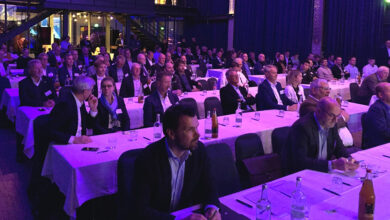
The Board of Executives of RAG-Stiftung, Essen/Germany, presented the figures for the past financial year today at its annual press conference at the Zollverein UNESCO World Heritage Site in Essen and reported on the start that the foundation has gotten off to in 2026. The foundation’s annual performance remained stable in 2025. Once again, RAG-Stiftung has fully met its obligations. Since the end of German hard coal mining in 2018, RAG-Stiftung has now spent more than 2 bn € on its perpetual obligations.
“RAG-Stiftung has paid this sum quietly – and exclusively from its investment income, not from its capital,” emphasised Bernd Tönjes, Chairman of the Board of Executives of RAG-Stiftung, today during the foundation’s annual press conference. The 2 bn € mark for perpetual obligations was exceeded in the first quarter of 2026, after the foundation spent 309 M € (previous year: 288 M €) on perpetual obligations in 2025 and met the perpetual costs in the first three months of the current year.
The foundation’s net profit for the past financial year amounted to around 420 M € (previous year: 452 M €, adjusted for the non-recurring effect from the sale of a block of Evonik shares). Despite the persistently challenging environment, the foundation was able to meet all its obligations: it met its perpetual obligations for the seventh time, expanded its funding activities and additionally increased the provisions for the long-term coverage of perpetual liabilities to around 10 bn €. “We performed solidly in this difficult environment. In doing so, we have continued to drive the diversification of the foundation’s assets,” said Tönjes.
Kerstin Terhardt, who has held the position of Chief Financial Officer of RAG-Stiftung since the beginning of May this year, emphasised the foundation’s strong starting position, on the basis of which she intends to build on what has been achieved. Resilience in a challenging environment is now the top priority for the foundation’s overall investment strategy. “To this end, we will further strengthen the foundation’s capital assets, broaden the revenue base and keep a close eye on costs,” she summarised the future agenda.
Cash-generating income in 2025 amounted to 634 M €, which was 25 M € higher than the cash outflow of 309 M € for perpetual obligations. The foundation’s assets stood at 15.9 bn € at the end of the year (previous year: 17 bn €); by April 2026, they had already risen again to around 16.5 bn €. These fluctuations are primarily due to the valuation of the foundation’s investments. “This is precisely where one of the key tasks for the coming years lies. We will continue to work on reducing this dependency,” said Terhardt. “Against the backdrop of increasingly demanding capital markets and growing economic uncertainties, the further expansion of our liquid investments is of particular importance.” In the past financial year, the foundation invested 363 M € in its broadly diversified investment portfolio.
In promoting education, science and culture, RAG-Stiftung was able to allocate 35 M € to projects in 2025 for the first time, following a decision by the Board of Trustees the previous year (previous year: 32 M €). Of this, around 17 M € went towards educational projects, 11 M € to science financing and 7 M € on to the cultural sector. By the end of 2026, RAG-Stiftung will have invested a total of around 310 M € in its financing activities since its inception. A key focus remains on supporting the education of socio-economically disadvantaged children and young people.
To measure the societal value added by its educational projects, RAG-Stiftung commissioned a calculation of the social return on investment (SROI) of its educational financing for the first time in 2025. It was supported in this by the consulting firm Prognos. To this end, educational projects carried out between 2020 and 2024 were analysed in terms of funding intensity, the target audience reached and the use of funds. “We are very pleased with the overall conclusion: depending on the scenario, the added value for society as a whole for every euro spent by RAG-Stiftung ranges from 3.30 € to 7.80, €” said Bärbel Bergerhoff-Wodopia, member of the RAG-Stiftung Board of Executives and responsible for the Human Resources department as well as the foundation’s funding activities. “This shows that our efforts are paying off – for every beneficiary, but also for society as a whole.”
In his closing remarks, Bernd Tönjes once again looked to the future: “We will be able to meet the challenges set before us, both today and in the future. We have set the right course to achieve this. RAG-Stiftung is gradually evolving into a ‘normal’ investor.” With regard to the persistently challenging economic situation, he emphasised: “We do not live on an island of bliss and have little influence over how the world around us will develop in the years ahead. But we can do everything in our power to ensure that RAG-Stiftung is well prepared for the vicissitudes of volatile markets in the future. As a perpetual investor, we must be.” (RAG-Stiftung/MRG)