Energy consumption is set to fall significantly in 2026
Annual forecast by AG Energiebilanzen – Significant impact of high prices
Energy consumption in Germany is highly likely to fall noticeably in 2026. The Working Group on Energy Balances (AG Energiebilanzen) anticipates a reduction of just under 3 % to 10,356 petajoules (PJ) or 353.4 Mtce compared with the previous year.
The annual forecast compiled by AG Energiebilanzen is based on the data available for the first nine months of the current year. For the year as a whole, AG Energiebilanzen expects energy-related CO₂ emissions to fall by just under 4 %. The subdued economic performance and the sharp rise in energy prices have played a significant role in this year’s decline in energy consumption. By contrast, weather conditions and other influencing factors had only a minor impact on energy consumption.
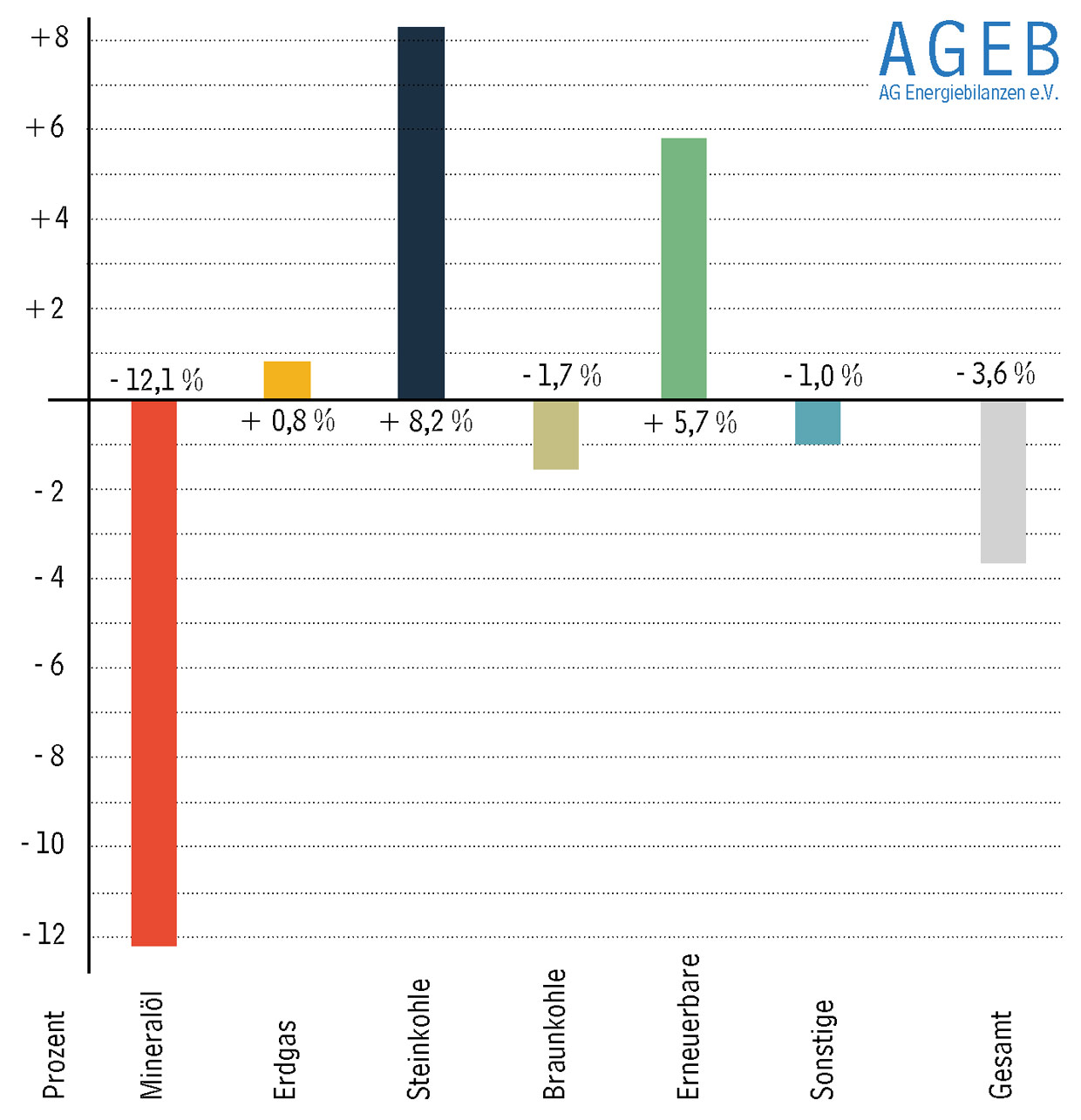
According to preliminary calculations by AG Energiebilanzen, domestic primary energy consumption in the first three quarters of the current year totalled 7,470 PJ, or 254.9 Mtce. This was 3.6% less than in the same period of the previous year. The trend in consumption was characterised by a fall in mineral oil sales and a further decline in the contribution from lignite. By contrast, there was a slight increase in natural gas consumption and a more pronounced rise in the consumption of renewable energies and hard coal.
Consumption of petroleum products fell by more than 12 % in the first nine months of the current year. Petrol consumption fell by 4 %, whilst demand for diesel fell by more than 9 %. Sales of aviation fuel fell by 3 %, and deliveries of crude petrol to the chemical industry dropped by around 5 %. Sales of light heating oil suffered a sharp slump, falling by more than 38 %, as consumers depleted their stocks due to high prices and purchased only small quantities to replenish them.
Natural gas consumption recorded a slight increase of 0.8% in the first three quarters of the current year. The current trend in consumption was primarily influenced by the low temperatures in the first two quarters of 2026 compared with the same period last year.
Consumption of hard coal rose by over 8 % overall in the first nine months. Its use in power stations for electricity generation increased by 7.2 %. Sales to the iron and steel industry rose by just over 1 %.
Consumption of lignite fell by 1.7 %. Between January and September, 1.5 % less lignite was mined in Germany than in the corresponding period of the previous year. Deliveries to public utility power stations fell by 0.9 %. The overall result reflects the increasingly flexible adaptation of lignite-fired power generation to current electricity demand, given the fluctuating feed-in of wind and solar power.
In the first nine months of 2026, electricity trade with neighbouring countries recorded a slight export surplus. 1.9 bn kWh more electricity flowed abroad than was imported from there. In the corresponding periods of the two previous years, electricity trade had still shown significant import surpluses. Electricity exports rose by a total of 18.2 % to 50.1 bn kWh, whilst electricity imports fell by 16.4 % to 48.2 bn kWh.
The contribution from renewable energies in the first three quarters of 2026 was 5.7 % higher overall than in the same period of the previous year. Compared with the same period last year, which saw low wind speeds, electricity generation from wind power rose by 14 %. Solar power generation increased its contribution by 12 %. Whilst the consumption of renewable energy for heating purposes rose only slightly, environmental heat harnessed by electric heat pumps and near-surface geothermal energy recorded an increase of 19 %. Hydropower output fell by 24 % due to weather conditions. In the transport sector, the consumption of biogenic diesel fuels in particular rose by 39 % as a result of the amended greenhouse gas reduction quota. (AG Energiebilanzen/MRG)