Mechanical completion of the mine water treatment plant in Gravenhorst: functional tests and commissioning can begin

A modern mine water treatment plant is currently being built in Gravenhorst, a district of Hörstel/Germany in North Rhine-Westphalia (Figure 5). An important milestone in the project has now been reached: mechanical completion.
The building construction, civil engineering works and installation of all central components were successfully completed by the end of August 2025. These include the aggregates, chemical tanks, pumps, measuring points and all the mechanical and EMSR technology (electrical, measuring, control and regulation technology). The technical building equipment – including fire alarm systems, lighting, safety lighting, ventilation and sanitary installations – will be completed in the coming weeks.
The mine water treatment plant is a technical facility for treating mine water from former mines. The aim is to treat the contaminated water and then discharge it into a natural body of water. Hard coal was mined at the Ibbenbüren site until 2018. With the closure of the RAG Aktiengesellschaft mine, planning began for dismantling and long-term water management measures. The company Umwelt- und Ingenieurtechnik GmbH (UIT), Dresden/Germany, was commissioned with the planning and implementation of the necessary treatment plant.
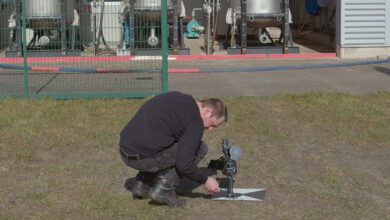
Functional tests and commissioning of the plant began in the summer – first in dry and then in wet conditions. Mine water from the western field of the former mine will initially be used for trial operation. Once this trial phase has been successfully completed, the plant will be transferred to regular continuous operation. It will thus make an important contribution to the sustainable management of mine water in Gravenhorst and to the protection of surrounding water bodies.
The mine water is treated in several consecutive process steps. The water is first fed into the plant via a tunnel approximately 7.4 km long, where it first reaches the pump house. Here, it is roughly cleaned by a rake system and then fed into the neutralisation basin by pumps in the first treatment stage. There, sulphate is precipitated with the aid of lime milk and the iron contained in the water is oxidised by aeration. The pre-treated water then flows towards the thickeners, where the solids are separated from the water in the sedimentation stage. The sedimented solids are pumped out of the thickeners and fed into the landfill ponds as long as capacity is available. When this is no longer possible, a sludge treatment hall, which has already been planned, will be built on the construction site, where the thin sludge can be dewatered and then disposed of.
The pre-treated water then passes through the post-sedimentation basin, which is divided into two fields. The longer retention time allows further solids to settle here. The water then enters the demanganisation stage and the discharge basin. There, further treatment steps are carried out and the pH value is adjusted. Only after this final treatment is the treated mine water checked and discharged into the natural water cycle in an environmentally friendly manner.
The plant designer/builder UIT was commissioned to construct the plant. The company has been active in plant engineering since its foundation in 1990 and has extensive experience in the design and construction of mine water treatment plants, chemical-physical treatment plants, and biogas testing and pilot plants.
As part of this project, UIT initially carried out the feasibility studies and preliminary conceptual review. Based on this, UIT then carried out the general contractor plant planning, 3D design and coordination and supervision of the plant construction. The company coordinated all the trades and partner companies involved in the construction. UIT is part of the General Atomics Europe Group, which was also actively involved in project management and organisational implementation. (General Atomics Europe/Si.)