RAG Aktiengesellschaft

  • Historic lump of coal reaches its final destination

    On 9 July, German Federal President Frank-Walter Steinmeier handed over this significant symbol of German industrial and social history to the Haus der Geschichte in Bonn, Germany.
    There, it is to serve as a central exhibit commemorating the defining era of German hard coal mining. The ceremony in the former federal capital was also attended by senior representatives of the RAG-Stiftung and RAG Aktiengesellschaft, Essen/Germany. Also present were former miners, mine rescue workers and the Ruhrkohle Choir.

    Steinmeier had received the lump of hard coal, weighing around seven kilograms and extracted from the Prosper-Haniel mine in Bottrop, at the farewell ceremony marking the end of German hard coal mining on 21 December 2018. It subsequently adorned the Federal President’s study at Bellevue Palace. In future, the piece of coal will be on display as the centrepiece of the permanent exhibition ‘You Are Part of History. Germany since 1945’ at the Haus der Geschichte – as a reminder of the country’s industrial and cultural history and as a symbol of the transformation that continues to have an impact to this day.

    For RAG, the lump of coal is not only a symbol of the past, but also of our present and the future. For with the end of active mining, our new task began: post-mining management. Today, we not only take responsibility for the long-term obligations that must be fulfilled sustainably and safely as a consequence of mining, but we also play an active role in shaping the transformation of former mining regions. This mission shapes our day-to-day work and carries decades of mining expertise into the future. (RAG/MRG)

  • New operations building in Herne strengthens safe mine water management in the Ruhr region

    With a new operations building at the RAG site in Herne/Germany, RAG Aktiengesellschaft, Essen/Germany, is strengthening its infrastructure for one of the key long-term tasks of post-mining: safe mine water management in the Ruhr region. Together with the central control room, the sustainable operations building will in future form a key hub for operational management and logistics. RAG inaugurated the operations building on 26 June 2026. The Lord Mayor of Herne, Frank Dudda, also attended the inauguration.

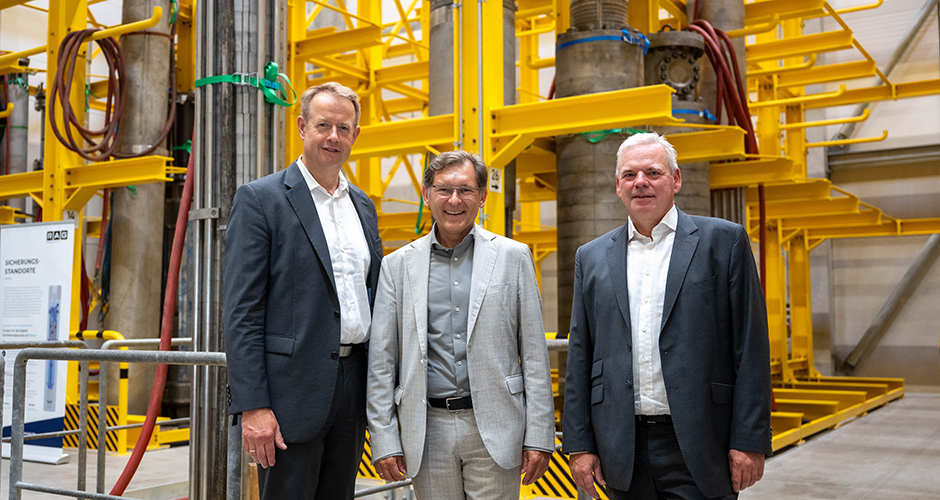
    Opening ceremony for the new operations building at RAG’s site in Herne (from left to right): Michael Kalthoff, Chief Executive of RAG Aktiengesellschaft, Frank Dudda, Lord Mayor of Herne, and Joachim Löchte, Chief Technical Officer of RAG Aktiengesellschaft. Photo: Ina Fassbender

    “Mine water management is essential for safe post-mining operations and a key long-term responsibility of RAG Aktiengesellschaft. To fulfil this mandate in the long term, we need technical excellence, reliability and sustainable practices,” emphasises Joachim Löchte, Chief Technical Officer of RAG Aktiengesellschaft. “The new operations building brings together precisely these requirements. It strengthens our capacity to act and supports us in managing mine water in the Ruhr region safely and efficiently in the long term.”

    Herne is closely linked to the history of mining through the former Pluto colliery site. Today, the site also symbolises transformation: from hard coal mining to an infrastructure that safeguards post-mining operations in the long term. The new operations building makes this transition visible and demonstrates how former industrial sites can be put to new, forward-looking use.

    “The Ruhr region is on its way to becoming a green industrial region – a prime example of this is RAG’s new operations building here in Herne. For our city, the site of the former Pluto colliery is a place steeped in tradition. We therefore welcome all the more RAG’s clear commitment to Herne as a location, which will strengthen the area in the long term. “The new operations building exemplifies the successful structural change and the transformation of former industrial sites into a sustainable, digital industrial region,” says Herne’s Lord Mayor Frank Dudda.

    At the Herne site, mine water management is already being controlled from the central control room. The new building now adds another crucial component: the logistics for mine water management. The approximately 1,700 square metres of space includes, amongst other things, storage areas for 50 mine water pumps and motors. Thanks to its central location, spare parts can in future be transported to the operational units of the mine water management system within a short time. In addition, the building houses a canteen as well as offices and meeting rooms for around 40 staff members. The new building thus combines operational functionality, short distances and reliable processes at a central location in the Ruhr region. Further information on mine water management: www.rag.de/wasserhaltung

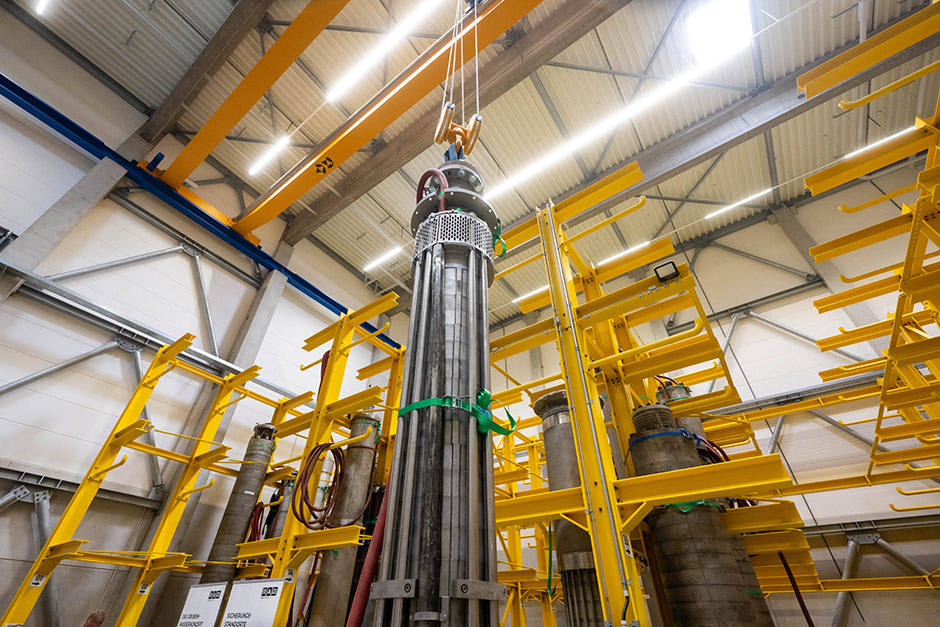
    The new operations building at the Herne site includes, amongst other things, storage rooms for 50 mine water pumps and motors. Photo: Ina Fassbender

    Sustainability also played an important role in the planning and construction of the building; only recycled or recyclable building materials were used. In addition, photovoltaic systems on the roof and façade generate electricity to meet the building’s own energy requirements.

    This commitment is particularly evident on the façade: the approximately 1,400 photovoltaic modules in three shades of grey are designed to evoke the hard coal mining history of the former Pluto mine site, thus bridging the gap between the industrial past and today’s post-mining activities. At the same time, they supply energy for the infrastructure through which RAG fulfils its long-term mission. (RAG/MRG)

  • RAG implements mine water management plan in Saarland: pumping operations in Reden to be discontinued

    RAG implements mine water management plan in Saarland: pumping operations in Reden to be discontinued

    RAG Aktiengesellschaft (RAG), Essen/Germany, will cease pumping operations for mine water management at the Reden site at the beginning of May. This step is part of the mine water management plan for the Saarland and follows the shutdown of the pumps at the Duhamel site, which was already implemented at the end of 2025. With the controlled rise in mine water levels, RAG is consistently fulfilling its long-term mandate as a post-mining company.

    Post-mining as a social responsibility

    “Managing mine water is a central task of post-mining and part of our long-term responsibility in the Saarland,” says RAG’s CEO, Michael Kalthoff. “By implementing the mine water management plan, we are ensuring the long-term safe control of mine water management, reducing the burden on the environment and water bodies, and creating reliable framework conditions for the region.”

    The raising of the mine water level is taking place on the basis of a legally binding planning approval decision and under the supervision of the relevant authorities. The aim is to organise mine water management in a way that is permanently safe, resource-efficient and controllable. The Reden site will remain in place as a backup site and will enable additional intervention options in the mine water system if required.

    “The mine water rise is being closely monitored and comprehensively supervised,” says Joachim Löchte, RAG’s Chief Technical Officer. “Integrated monitoring enables us to control the rise in a managed manner, identify developments at an early stage and ensure the safety of the system, the environment and drinking water at all times”

    RAG’s mine water management in Saarland. Source: RAG

    Mine water concept for people and the environment

    The controlled rise in mine water is a central component of RAG’s mine water concept. It helps to relieve pressure on surface waters in the region and reduce energy consumption in water management in the long term. By consolidating the underground water flows, mine water is brought to the surface at fewer points. This provides long-term protection for water bodies such as the River Saar and its tributaries and supports ecological development processes. Expert reports assess the risks associated with the process as low. The protection of people and the environment – in particular groundwater and the drinking water supply – is the top priority. The mine water remains permanently well below the aquifers.

    Experts assess the likelihood of mining damage associated with the mine water rise as very low – reports of mining damage are examined and processed on the basis of transparent and legally regulated procedures.

    Further information and contacts: www.rag.de/loesungen/bergschaeden.

    Mine water management as a long-term responsibility

    By implementing the mine water management concept, RAG is fulfilling its post-mining obligations. The regulation of mine water is a long-term task that requires responsibility spanning generations. The initiative in Reden is part of RAG’s comprehensive long-term responsibilities, which focus on safety, environmental protection and water conservation.

    Further information on the mine water concept and monitoring in Saarland, as well as FAQs, can be found at: www.rag.de/wasserhaltung-saar.

  • The final breakthrough has been achieved

    A milestone in mine drainage at Ibbenbüren was celebrated in style.

    The tunnel boring machine, christened “Tisa”, used for the eastern section of the Ibbenbüren mine drainage canal, has reached its final destination: Shaft 1 of the von-Oeynhausen mine. This marks the completion of the 7.4 km-long mine water canal after around 26 months of construction. The excavation of the canal has now been completed. In future, mine water from the eastern and western fields of the Ibbenbüren mine will be channelled through the canal to the new mine water treatment plant currently under construction in Gravenhorst. This was celebrated on 24 February 2026 with a ‘breakthrough ceremony’.

    The milestone in mine water management in Ibbenbüren was celebrated in style. Photo: RAG/Ina Fassbender

    Jürgen Kunz, Head of the RAG’s Ibbenbüren Business Unit, explained at the start that initial ideas for the Ibbenbüren mine water canal had been considered as long as ten years ago. Kunz: “In autumn 2014, the first presentations were made outlining the basic considerations for the excavation of the mine water canal as an alternative to a pumping solution. Today we are gathered here to mark the final milestone in the tunnelling work.” He welcomed the mayors of the mining region, representatives of the Arnsberg district government, the participating companies, as well as representatives of the RAG-Stiftung and RAG.

    Bernd Tönjes, Chairman of the Board of the RAG-Stiftung. Photo: RAG/ Ina Fassbender

    Since the end of German hard coal production, pumping mine water has been one of the tasks left behind by the mining industry, emphasised Bernd Tönjes, Chairman of the Board of the RAG-Stiftung, in his welcoming address. The RAG-Stiftung was established in 2007 to provide long-term funding for these perpetual tasks. Tönjes: “But what we would prefer to do even more than pumping is not to pump. And that is where it is possible.” And in Ibbenbüren, this is feasible due to the favourable topographical and geological conditions.

    This is because the mine water channel allows the mine water to rise to 63 m above sea level. As a result, just as in Westfeld, pumps can be dispensed with. Tönjes: “This means significant savings in costs, energy and CO₂ emissions. Furthermore, the constituents of the mine water are significantly reduced.” So this is the best solution for managing mine water for people, drinking water and the environment.

    Peter Schrimpf, CEO of RAG. Photo: RAG/ Ina Fassbender

    The excavation of the mine water canal was not an off-the-shelf project, emphasised RAG CEO Peter Schrimpf: “We all had to learn as we went along and adapt to a wide variety of conditions.” For example, both tunnel boring machines and the team had to cope with constantly changing geological conditions. Schrimpf: “Lots of water, little water, high water pressure, low water pressure, rock that was hard at times, soft at others. There was a bit of everything. It does get a bit gloomy in front of the cutter from time to time. Even at this depth.” That is why today is such a memorable moment for everyone, emphasised the RAG CEO. “A moment for which I would like to express my special thanks to everyone involved.”

    There is still a lot to be done. From now on, the focus is on the complete expansion of the tunnel, before the mine water from the East Field, according to current forecasts, reaches the level of the canal in 2026 and flows into it. Through the canal, the mine water from the West and East Fields is channelled separately into the new mine water treatment plant in Gravenhorst, where it is then treated in an environmentally sound manner.

    Schrimpf: “Here in the Tecklenburg region, we are demonstrating that we can start receiving mine water in record time following the closure of a mine. And here at this site, we are showing that we are not just capable of hard coal mining. We are also experts in post-mining – with innovative and sustainable solutions. An important and reliable partner for this region – that is what we want to remain in the future.” (RAG/WK)

  • Spectral analyses provide information about mine water quality

    International start-up tests innovative process in Camphausen as part of the BRYCK WaterHub. SpectroMarine’s expertise and technology will enable real-time analyses in the future.

    The collaboration between RAG Aktiengesellschaft, Essen/Germany, start-ups and the BRYCK start-up and innovation centre is entering its next practical phase. While Dutch start-up Acquaint is testing an innovative inspection system for shaft pipelines in the Ruhr area, the focus in Saarland is now on real-time analysis of mine water. The Latvian-Dutch start-up SpectroMarine is providing the technology and expertise for the pilot project at RAG’s Camphausen site in Quierschied/Germany. Whether and how the innovative process proves itself will become clear over the next six months.

    Until now, only a few parameters of mine water could be reliably measured on site. For many, there are no immediate results. The mine water must first be sent to a laboratory for analysis. This takes time. SpectroMarine wants to change this and also enable continuous, automatic monitoring directly on site. To this end, the start-up is using intelligent sensor systems with optical measurement technology. With the help of spectral analyses, it should be possible to detect in real time whether the water quality is changing.

    So far, the sensors have been used successfully in the inflow of seawater desalination plants. In the first two months of pilot operation, SpectroMarine now wants to prove that the technology also works with the special mine water from the Camphausen central water management system. Based on this, the start-up is testing whether the sulphide content can be determined directly at the shaft. This would be important for controlling the hydrogen peroxide plant and avoiding unnecessary overdosing. Comparative data is provided by the ‘traditional’ RAG water analyses, which continue to be carried out regularly in parallel. If the test phase is successful, the plans envisage a gradual expansion to other RAG sites and measuring points.

    To mark the start of the pilot operation, representatives from RAG, SpectroMarine and BRYCK met at the Camphausen mine water treatment plant on 13 November 2025. Openness, partnership and a drive to implement characterised the work on installing the analysis prototype. All sides were enthusiastic about developing solutions. Saarländischer Rundfunk accompanied the kick-off. Speaking to the media representatives, Svenja Weinand from RAG’s Mine Water Planning/Concepts department (T-WH-GK) emphasised the importance of real-time water analysis: “When a full analysis of the water is carried out, a sampler has to go to the sampling point, transfer the water into sample bottles and take it to the laboratory. There it is analysed. Then the data has to come back to us.” Depending on the scope of the analysis, this can take anywhere from a few days to a few weeks. Only with live values can RAG react quickly to changes in mine water.

    With regard to the cooperation between RAG, BRYCK and start-ups, Torben Stallmann, BRYCK WaterHub, says: “When we talk about innovation in the water sector, this is exactly what we mean: recognising potential, enabling it and finally implementing it. Together with RAG, the start-up and our team at WaterHub, we are creating the conditions under which new solutions for the water world can emerge – step by step, very close to practical application.”

  • A tower that glides up underground

    A tower that glides up underground? Sounds strange – but it is. You can see it in the centre shaft of the Ibbenbüren mine water channel. The ATI consortium erected the 70 m high steel and concrete structure in just two weeks (Figure 1).

    The Ibbenbüren tower was not only built quickly, but also economically. Slipforming made it possible. Piece by piece – always just under 2 cm – the tower grew in height. After each load of concrete, hydraulic pumps lifted the formwork a little. Construction materials were supplied by a single crane, which – positioned in the centre of the shaft – lowered concrete and steel into the depths.

    In future, the tower will be used to ventilate the mine water channel and as an escape route during inspection work. (RAG/Si.)

  • New process enables almost perfect digital twins of RAG sites

    Using a new scanner, RAG’s geomonitoring team can generate highly accurate 3D models in no time at all using Gaussian splatting – mobile and with impressive depth of detail. In future, other departments within the company will also be able to use the equipment for surveys, enabling them to create digital twins on which some work steps can be carried out virtually. There are already many ideas for specific applications.

    The new device – a Lixel L2 Pro from XGrids – is equipped with three powerful panoramic cameras, a 3D laser scanner and a GPS antenna, among other features (Figure 4). It has a range of up to 120 m and the data is ­automatically georeferenced. “A walk-through with the scanner in hand is enough to capture extensive figure and scan data in just a few minutes,” explains Andreas Schlienkamp, head of the geomonitoring team at RAG.

    The scan data is then processed on the geomonitoring computers. Within one to two hours, a near-perfect digital twin is created. This is made possible by the use of the “Gaussian splatting” process, which has only become practical thanks to rapid developments in the field of artificial intelligence and graphics chips. The 3D models allow virtual tours of the photorealistic environment as well as precise measurements of individual plant components or construction site areas. In future, the scans can also be easily combined with classic survey points and historical data.

    “After a brief introduction, the scanner is so easy to use that in future, all departments will be able to borrow the device for upcoming surveys and use it independently,” promises Schlienkamp. The geomonitoring team then processes the data and provides the finished 3D models.

    During the test phase, many possible applications emerged in discussions with other departments within the company. Here are a few examples:

    • General documentation of facilities such as groundwater purification plants or mine water locations;
    • conditions at remediation sites for sinkholes, such as possible traffic routes for heavy equipment;
    • conditions at gas drilling sites;
    • planning of (new) construction measures at sites;
    • representation of sites for communication purposes as an alternative to drone images; and
    • recording of individual facilities for training purposes for new employees.

    According to some RAG departments, the 3D models provide such a detailed visual impression that, once they have been captured, a number of on-site visits can be saved in future. This applies both internally and externally, as it would also be conceivable to make the virtual twins available to external service providers so that necessary measurements, e. g., can be carried out virtually. In view of the great potential, RAG is already considering purchasing additional scanners, according to Schlienkamp.

    The experience with “Gaussian splatting” is also meeting with great interest outside the company: RAG has been invited to provide information on the practical applications of the process in the “Statewide Digital Twins” network group. Esri, the market leader in geographic information system (GIS) software, has already sought information from RAG. Emschergenossenschaft and Lippeverband (EGLV) were also enthusiastic about the possibilities. Other companies have expressed interest in an exchange.

    Gaussian splatting is a 3D visualisation technique that uses small, overlapping 3D ellipses called “splats” instead of traditional points or polygons. These splats contain information such as position, colour and transparency. The arrangement of millions of these splats creates a volumetric image of reality that enables particularly realistic representations in virtual reality applications. The process is efficient because it requires less memory and allows for faster processing of large amounts of data. (RAG /Si.)

  • Mechanical completion of the mine water treatment plant in Gravenhorst: functional tests and commissioning can begin

    A modern mine water treatment plant is currently being built in Gravenhorst, a district of Hörstel/Germany in North Rhine-Westphalia (Figure 5). An important milestone in the project has now been reached: mechanical completion.

    The building construction, civil engineering works and installation of all central components were successfully completed by the end of August 2025. These include the aggregates, chemical tanks, pumps, measuring points and all the mechanical and EMSR technology (electrical, measuring, control and regulation technology). The technical building equipment – including fire alarm systems, lighting, safety lighting, ventilation and sanitary installations – will be completed in the coming weeks.

    The mine water treatment plant is a technical facility for treating mine water from former mines. The aim is to treat the contaminated water and then discharge it into a natural body of water. Hard coal was mined at the Ibbenbüren site until 2018. With the closure of the RAG Aktiengesell­schaft mine, planning began for dismantling and long-term water management measures. The company Umwelt- und Ingenieurtechnik GmbH (UIT), Dresden/Germany, was commissioned with the planning and implementation of the necessary treatment plant.

    Functional tests and commissioning of the plant began in the summer – first in dry and then in wet conditions. Mine water from the western field of the former mine will initially be used for trial operation. Once this trial phase has been successfully completed, the plant will be transferred to regular continuous operation. It will thus make an important contribution to the sustainable management of mine water in Gravenhorst and to the protection of surrounding water bodies.

    The mine water is treated in several consecutive process steps. The water is first fed into the plant via a tunnel approximately 7.4 km long, where it first reaches the pump house. Here, it is roughly cleaned by a rake system and then fed into the neutralisation basin by pumps in the first treatment stage. There, sulphate is precipitated with the aid of lime milk and the iron contained in the water is oxidised by aeration. The pre-treated water then flows towards the thickeners, where the solids are separated from the water in the sedimentation stage. The sedimented solids are pumped out of the thickeners and fed into the landfill ponds as long as capacity is available. When this is no longer possible, a sludge treatment hall, which has already been planned, will be built on the construction site, where the thin sludge can be dewatered and then disposed of.

    The pre-treated water then passes through the post-sedimentation basin, which is divided into two fields. The longer retention time allows further solids to settle here. The water then enters the demanganisation stage and the discharge basin. There, further treatment steps are carried out and the pH value is adjusted. Only after this final treatment is the treated mine water checked and discharged into the natural water cycle in an environmentally friendly manner.

    The plant designer/builder UIT was commissioned to construct the plant. The company has been active in plant engineering since its foundation in 1990 and has extensive experience in the design and construction of mine water treatment plants, chemical-physical treatment plants, and biogas testing and pilot plants.

    As part of this project, UIT initially carried out the feasibility studies and preliminary conceptual review. Based on this, UIT then carried out the general contractor plant planning, 3D design and coordination and supervision of the plant construction. The company coordinated all the trades and partner companies involved in the construction. UIT is part of the General Atomics Europe Group, which was also actively involved in project management and organisational implementation. (General Atomics Europe/Si.)

  • New leadership for post-mining tasks: Michael Kalthoff and Joachim Löchte will figure as the future management team of RAG Aktiengesellschaft

    RAG Aktiengesellschaft, Essen/Germany, has reorganised its management team: on 1st July 2025, Michael Kalthoff took over as Chief Executive Officer and Director of Labour Relations, and Joachim Löchte took over as Chief Technology Officer. With their experience and vision, they intend to continue driving forward the transformation of the company and sustainably master the challenges of post-mining.

    “With the new management team, we are focusing on future-oriented leadership that places innovation and sustainability at the centre. The experience and commitment of Michael Kalthoff and Joachim Löchte are crucial to continuing the successful transformation of RAG as a post-mining company and setting the course for a sustainable future,” emphasised Bernd Tönjes, Chairman of the Supervisory Board of RAG.

    As Chairman of the Executive Board, Michael Kalthoff will continue to be responsible for RAG’s financial affairs and will also take on the role of Director of Labour Relations. An economist by training, Kalthoff has known RAG since its days as an active hard coal producer. He started his career with a traineeship at Ruhrkohle Bergbau AG, Herne/Germany, which laid the foundation for his career at what was then Deutsche Steinkohle AG. When he moved to the RAG-Stiftung, his financial responsibilities were later expanded to include issues relating to the promotion of education, science and culture. In 2019, Kalthoff was appointed to the RAG Executive Board as Chief Financial Officer. Since then, he has been shaping the change in RAG’s organisational structure in the post-mining era and is particularly committed to RAG’s digitalisation strategy.

    “RAG has evolved from an active mining company into a company that addresses the consequences of mining – in an ecologically, technically and socially sustainable manner. For us, post-mining means much more than dismantling shafts or renaturating and revitalising land. For us, post-mining means thinking about the future, breaking new ground, taking responsibility – for our employees, but also for the society in which we live. We want to actively shape this change and build a bridge – between yesterday and tomorrow, between responsibility and a new beginning. Because RAG’s work in the context of post-mining is of fundamental importance for the former mining regions. I am very pleased to now be shaping these tasks as Chairman of the Executive Board,” said Kalthoff.

    RAG bears long-term responsibility for water management in the former mining regions in the Ruhr area, Saarland and Ibbenbüren. This includes the controlled drainage of mine water from disused mines to ensure safe water management in the affected regions. In addition, the management of surface water in areas affected by subsidence is one of the central tasks in order to prevent possible flooding and maintain the ecological balance. All so-called perpetual tasks are financed by RAG-Stiftung in Essen.

    As Chief Technology Officer, Joachim Löchte will be responsible for technical operational issues in his department. The engineer has been with the Group since 2014. Prior to that, he was responsible for environmental and energy issues with a focus on corporate responsibility at RWE AG. He began his career at RAG in active hard coal mining as Head of Occupational Health and Safety and Environmental Protection. With a focus on occupational health and safety and environmental protection issues, he shaped the transition to post-mining as well as the development of a sustainability strategy. The aim of this strategy is to make RAG CO2-neutral by 2030 in terms of supplying its own sites with electricity and handling perpetual obligations. As Chief Technology Officer, Löchte will also focus particularly on RAG’s sustainability strategy.

    “We have a clear corporate mission to deal responsibly with the consequences of mining. I am committed to securing the old mining sites and the technical implementation of this mission, with a particular focus on mine water management to protect drinking water and groundwater. Our declared goal is to make these processes sustainable in the long term. To this end, we use renewable energies on our own land and heat from the mine water. In order to successfully carry out our tasks, strong partnerships are just as important for RAG as the acceptance of the local people,” says Löchte.

    Michael Kalthoff took over as Chairman of the Executive Board and the duties of Labour Director from Peter Schrimpf, who retired after more than 40 years with the RAG Group, 21 of them on the Executive Board and seven as Chairman of the Executive Board. Schrimpf is considered one of the key architects of the socially acceptable phase-out of German hard coal mining. In addition to his consistent focus on occupational safety and new forms of organisational development, one of his main tasks was the restructuring of the group following the phase-out of hard coal mining. (RAG/Si.)

  • Ceremonial farewell for the chief miner

    At the invitation of Bernd Tönjes, Chairman of the Board of Executives of RAG-Aktien­gesellschaft, Essen/Germany,  the official farewell ceremony for RAG CEO Peter Schrimpf took place on 18th June 2025. As an expression of the high level of recognition and esteem that the outgoing CEO enjoys across economic, social and institutional boundaries, numerous top representatives from politics, business, society and sport attended the festive ceremony in the historic Lohnhalle at the former Lohberg mine. Among the guests: the Deputy Minister President of North Rhine-Westphalia Mona Neubaur, NRW Minister of Labor Karl-Josef Laumann, the Deputy Minister President of Saarland Jürgen Barke and the Saarland Minister of the Interior Reinhold Jost. The entire five-member IG BCE Executive Board around Michael Vassiliadis also attended the farewell ceremony.

    In their speeches, Tönjes and Vassiliadis paid tribute to Schrimpf as one of the key figures in shaping the socially responsible exit from the German hard coal industry. In particular, they highlighted his strategic skills, his sense of social responsibility and his tireless commitment to the company. In addition to his focus on occupational safety and new forms of organizational development, his management style was a small revolution in a hierarchical environment. In this context, they also emphasized Schrimpf’s special human qualities, who had led the company through difficult times with his particularly appreciative and open manner, creating stability and trust.

    Tönjes: “Many of those present today have accompanied you on your professional path. And I can confirm that: You were great as a colleague, but your leadership style should not go unmentioned. You had already mastered the soft skills that are so often cited these days when nobody even knew the term as such. Accordingly, you had a management style that was viewed with skepticism at the time, which was characterized by your appreciation of your employees and which has long been known to be the key to success. You have the gift of winning people over and convincing them without making decisions single-handedly from above.”

    Vassiliadis: “It is thanks to you that the German hard coal mining industry has become a benchmark for German industry when it comes to occupational safety. You have proven that continuity and investment in people pay off – in the invaluable currency of identification and mutual respect. What’s more, with your authentic manner, you have managed to make people trust you 100 %. Today, everyone can and should learn from you how transformation and co-determination work together.”

    During the event, Vassiliadis presented Schrimpf with the Medal of Honor of the German Mining, Chemical and Energy Industrial Union (IG BCE), which he received for his many years of commitment and service. He had rarely experienced an entrepreneur who had lived co-determination as Schrimpf had.

    In his speech, Schrimpf looked back on the major and significant stages of his professional career (Figure 1). He thanked his companions and his staff for their trust. He went on to say that today was yet more proof of the historically significant role played by the hard coal industry in social developments and the post-mining era.

    Moved by the many reactions to his departure, he said: “I was right where I am and where I was – with the miners and with my family. My thanks go to you all.” He is looking forward to the time that now lies ahead of him. He will certainly not be idle. One or two positions await him – and more time for his family.

    A special sign: Schrimpf’s entire family took part in the event, with father and granddaughter, three generations were present on this special day. At the end, he wished for a song that he had chosen together with his son: “Days” by The Kinks rang out to a standing ovation.

    RAG CFO Michael Kalthoff, who introduced the event, concluded with the words: “Today we are saying goodbye to a man who not only moved a lot, but also kept a lot in motion: Peter Schrimpf – miner, philanthropist, designer. Your farewell, dear Peter, is not a quiet departure, but a moment of significance. Your departure as CEO of RAG marks the end of an era – not only for RAG, but also for the many people who have experienced you over the decades as a clever strategist, a straightforward miner and an approachable person. This not only marks the end of an impressive professional career – it also marks the end of a piece of mining culture that you played a key role in shaping over many decades.” (RAG /Si.)

Back to top button