Second Research Symposium of Bochum’s Universities of Applied Sciences boosts interdisciplinary exchange at the THGA
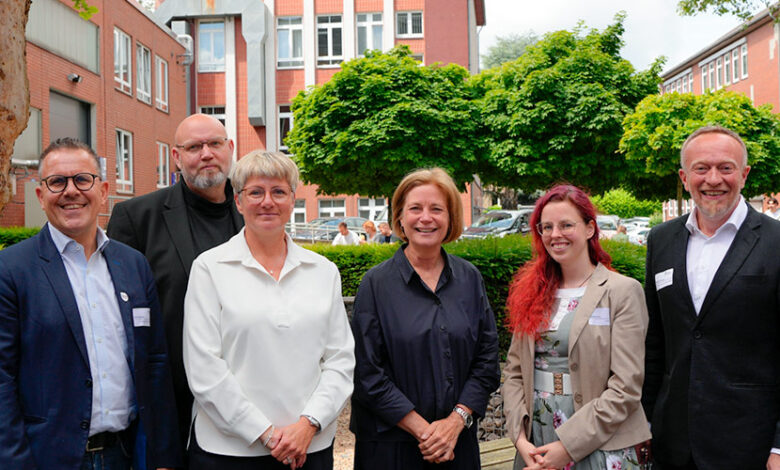
Following its successful debut in 2024, the research symposium organised by Bochum’s Universities of Applied Sciences (HAW) is now in its second year. This year, the Georg Agricola University of Applied Sciences (THGA) hosted the event under the motto ‘Research connects – Shaping the future with knowledge’, with the aim of specifically strengthening academic exchange across disciplinary and institutional boundaries. This well-established event provided a central platform for Bochum’s HAWs to raise the profile of applied research across its full spectrum, to network valuable expertise within the region, and to provide new impetus for the future. Not only did it highlight the wide range of topics and innovative strength of the participating institutions, but it also specifically identified common ground in terms of content and methodology.
“Research at our universities thrives on direct transfer into practice and the courage to develop genuine innovative strength by working in close collaboration,” said Prof. Susanne Lengyel, President of the THGA, as she welcomed the guests. “The symposium impressively demonstrates that we can only answer the pressing questions of our time – from the energy transition to digital transformation – if we look beyond our own horizons. As hosts, we look forward to bringing together bright minds and acting as a driving force for innovation in Bochum and the region.”
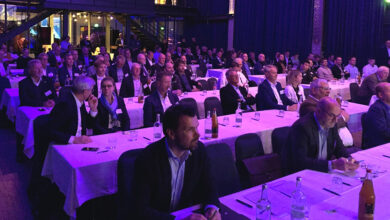
The varied agenda offered the more than 150 participants not only specialist presentations but also political and strategic insights into the research landscape. In the morning session, Jagoda Josch (adviser and coordinator for Science and the City of Bochum) and Andrea Kienle (Head of the Research Department at the Ministry of Culture and Science) highlighted the importance of HAW research for urban society and the state of North Rhine-Westphalia.
Jagoda Josch emphasised how closely science and the city depend on one another to take up new ideas and put them into practice. “Research brings curious people together,” she said, highlighting the driving force and added value of scientific collaboration across institutional and societal boundaries.
Andrea Kienle contextualised the development of HAW research in North Rhine-Westphalia within the framework of higher education policy and highlighted just how dynamically research at universities of applied sciences has evolved in recent years. At the same time, she encouraged researchers to consider even challenging funding opportunities, such as DFG grant applications.
In the subsequent academic sessions, researchers presented current projects from the forward-looking clusters ‘Resources & Sustainability’, ‘Social Affairs & Health’ and ‘Computer Science & Data Science’
The fact that this year’s event has demonstrated a significantly enhanced structure and level of professionalism is also reflected in the academic documentation: For the first time, a dedicated abstract volume with an official ISBN number is being published to accompany the event, edited by Bochum University of Applied Sciences.
Prof. Michael Prange, Vice-President for Research, Development and Transfer at THGA, sees this consistent development as confirmation that the institution is on the right track: “Our research has gained enormously in depth and relevance in recent years, driven not least by our right to award doctorates through the NRW Doctoral College. With this second symposium, we are establishing a genuine powerhouse of networking. We are defining the format much more clearly, ensuring the programme items are more closely interlinked, and actively fostering new collaborations – which is precisely why we have also integrated formats such as Science Speed Dating this year.”
A central highlight and the tangible embodiment of the guiding principle ‘Research Connects’ was the extensive poster session in the afternoon. Researchers at all stages of their careers presented their projects across a total of 60 posters. The spectrum ranged from health and social research, through sustainability and mobility topics, to computer science, robotics and applied technologies. It was here in particular that it became clear just how different the individual projects are in detail – and yet how many surprising connections, both in terms of content and methodology, exist between them. The poster session provided the ideal setting for in-depth discussion and new collaborations.
The following were awarded the prize for best scientific posters of 2026:
- Vera Lehmkuhl (EvH): Wanderverhalten aus der Sicht von Menschen mit Demenz. Eine ethnografische Untersuchung in stationären Altenpflegeeinrichtungen. [Wandering behaviour from the perspective of people with dementia. An ethnographic study in residential care homes for the elderly.]
- Janna Leimann (HSBO): MUTSPRUNG.
- Malin Chrzon (THGA): Vom Monitoring zum Indikator: Biodiversitätsentwicklung im Industrieumfeld messbar und sichtbar machen. [From monitoring to indicators: making biodiversity trends in industrial settings measurable and visible.]
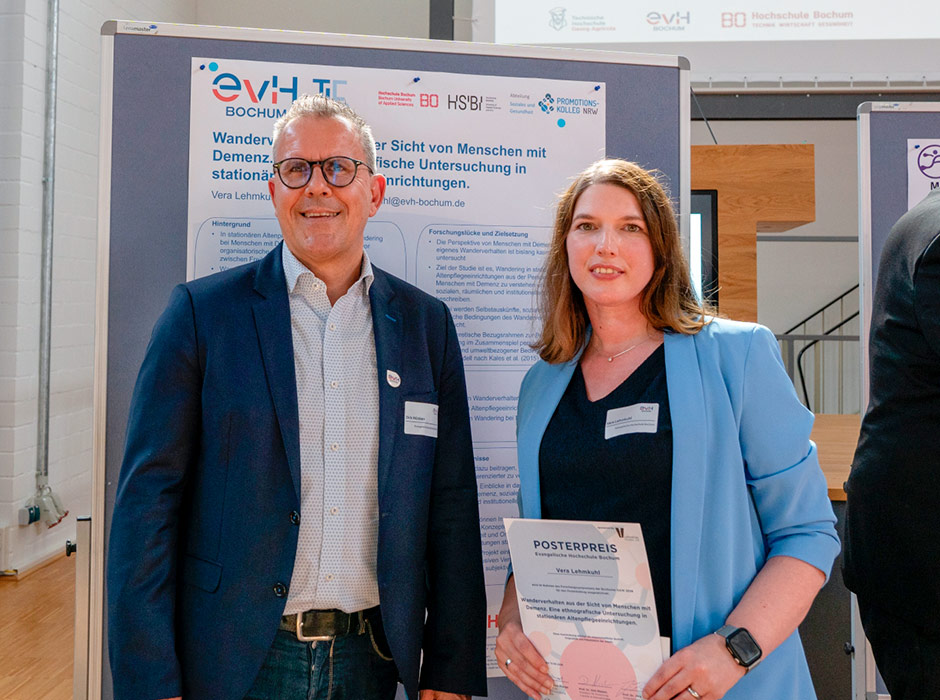
and Prof. Dirk Nüsken (EvH).
Photo: THGA
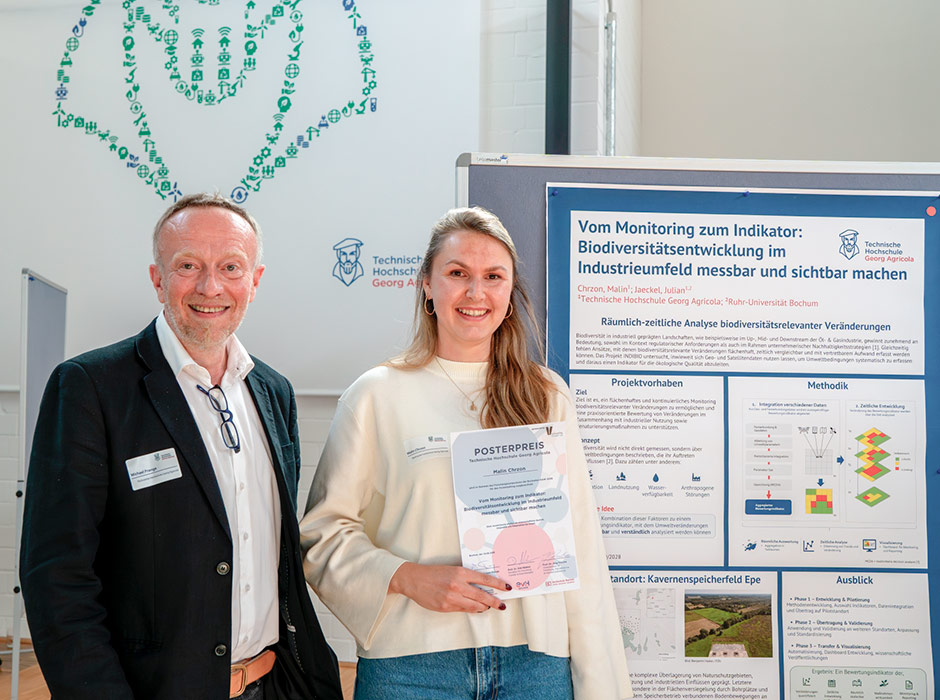
and Prof. Michael Prange (THGA).
Photo: THGA
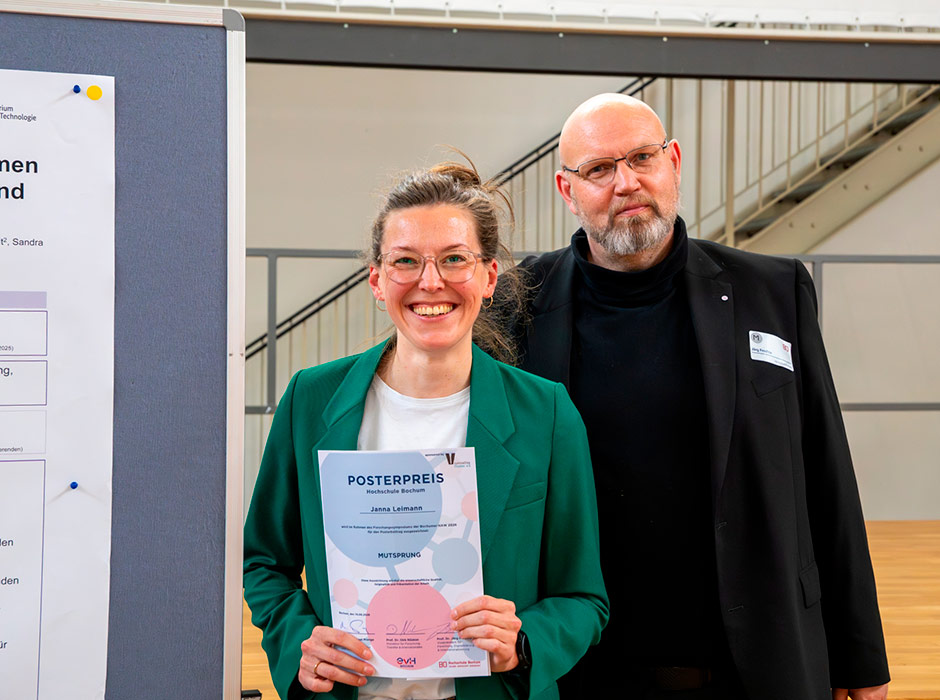
and Prof. Jörg Frochte (HS Bochum).
Photo: THGA